
FAA Flight Licenses (Certificates)
Student Pilot Certificate
A Student Pilot Certificate is the entry point into aviation and allows an individual to begin flight training under the supervision of a certified instructor. While it does not permit solo flight until specific requirements are met, it establishes the foundation for all future pilot privileges. Students must meet medical standards and demonstrate basic aeronautical knowledge before their instructor endorses them for solo operations.
Sport Pilot Certificate
The Sport Pilot Certificate is designed for recreational flying with lower training requirements and limitations compared to higher-level certificates. It allows pilots to operate light-sport aircraft during daytime in good weather conditions. This certificate is ideal for individuals seeking a simpler, more affordable path into aviation without the need for a medical certificate, as a valid driver’s license is typically sufficient.
Recreational Pilot Certificate
The Recreational Pilot Certificate offers more privileges than a Sport Pilot but fewer than a Private Pilot. It allows flying larger and more capable aircraft but with restrictions such as limited passenger capacity, distance limitations, and daytime-only operations. It serves as a stepping stone for pilots who want more capability than sport flying but are not yet ready for the full Private Pilot requirements.
Private Pilot Certificate (PPL)
The Private Pilot Certificate is the most common license and allows individuals to fly for personal or business travel, carry passengers, and operate a wide range of aircraft. While private pilots cannot be compensated for flying, they gain the skills needed for cross-country operations, night flying, and more advanced maneuvers. This certificate is the foundation for anyone pursuing a professional aviation career.
Commercial Pilot Certificate (CPL)
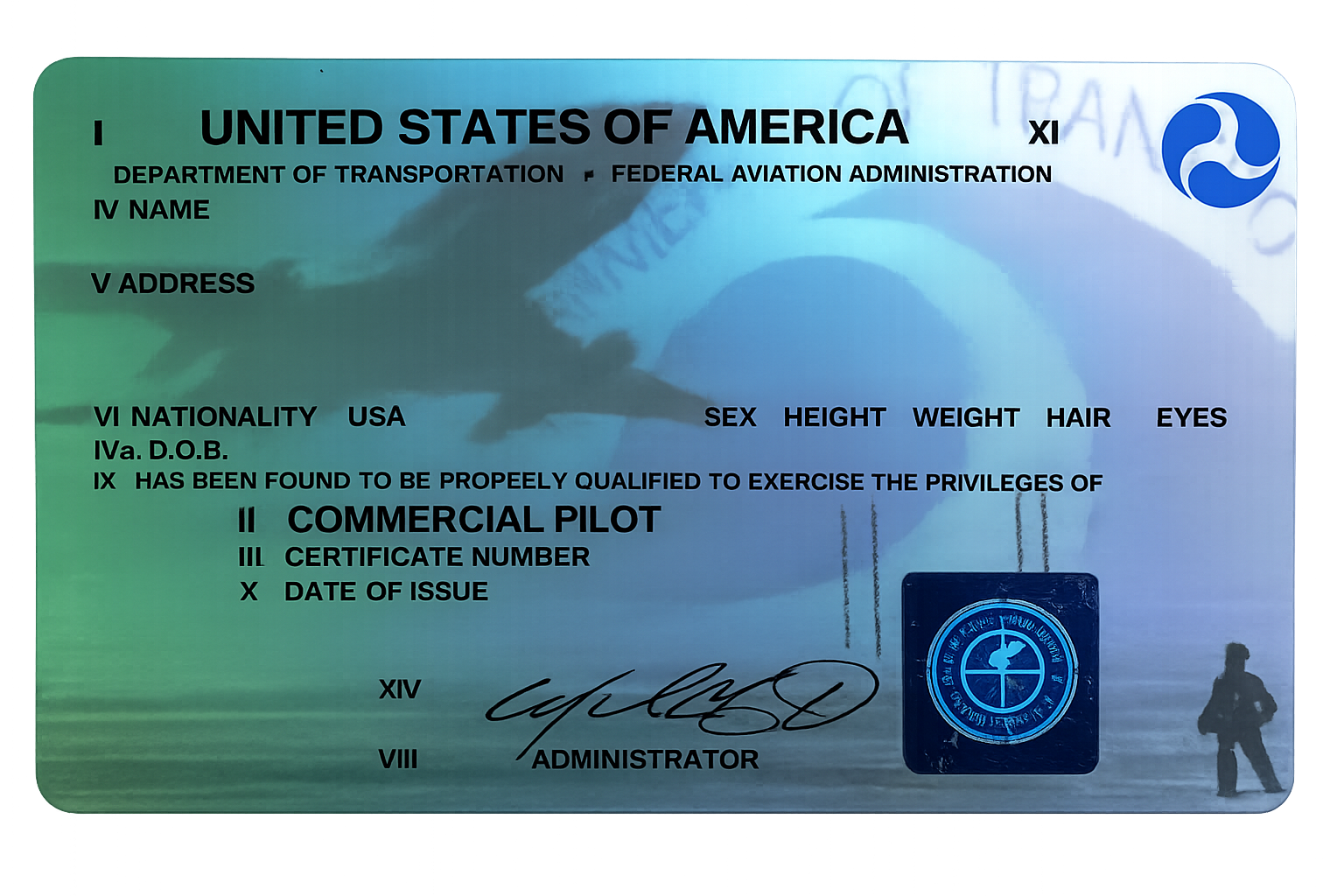
A Commercial Pilot Certificate allows pilots to be compensated for flying and opens the door to professional aviation roles such as charter flying, aerial photography, cargo operations, and flight instruction (with additional ratings). Training focuses on advanced aircraft handling, precision maneuvers, and higher performance standards. It is a major milestone for pilots pursuing aviation as a career.
Airline Transport Pilot Certificate (ATP)
The Airline Transport Pilot Certificate is the highest level of FAA certification and is required to serve as a captain or first officer for scheduled airlines. ATP training emphasizes advanced aerodynamics, crew resource management, high-altitude operations, and complex decision-making. Pilots must meet strict experience requirements, including a minimum of 1,500 flight hours in most cases, making it the pinnacle of professional pilot qualifications.
Remote Pilot Certificate (Part 107 – Drone License)
The Remote Pilot Certificate authorizes individuals to operate drones commercially under FAA Part 107 regulations. It requires passing a knowledge test covering airspace, weather, regulations, and safe drone operations. This certificate is essential for anyone using drones for business purposes such as photography, surveying, inspections, or mapping.
Additional FAA Ratings
• Instrument Rating (IR)
• Multi-Engine Rating (ME)
• Certified Flight Instructor (CFI)
• CFII (Instrument Instructor)
• MEI (Multi-Engine Instructor)
• Type Ratings (for large or turbine aircraft)